Visit Esthetique Dental Office Today Or Call: (817) 741-1240



Esthetique Dental Provides a Conservative Approach to Tooth Restoration
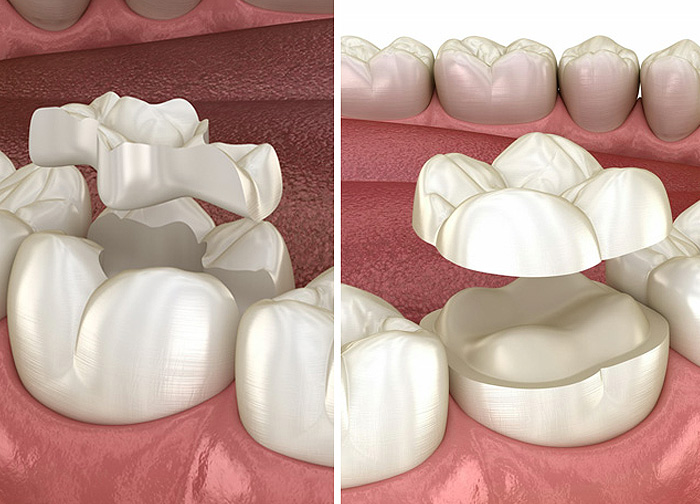
Dental inlays and onlays are a more conservative approach to tooth restoration than full crowns. They are used to repair rear teeth that have mild to moderate tooth decay, or for cracked teeth where the damage does not warrant a dental crown. Porcelain, composite resin, and sometimes gold are used to create inlays and onlays. Inlays refer to those procedures where the bonded material is limited to the center of the tooth, while onlays refer to those procedures where the bonded material can extend further to one or more cusps of the tooth.
What are the benefits of inlays and onlays?
- Natural look: Inlays and onlays have a natural tooth color that makes them virtually invisible compared to metal fillings.
- Great fit: Inlays and onlays will not expand or contract based on temperature like metal fillings.
- Longevity: Inlays and onlays can last up to thirty years, longer than any other type of filling.
- Minimal tooth structure removed: Inlays and onlays require the minimal removal of a tooth’s surface, helping to preserve the maximum amount of healthy tooth structure while restoring decayed or damaged areas.
How it's done?
Typically, two visits are required for the placements of inlays and onlays. On the first visit, one of our Keller dentists will take an impression of your tooth, which will be sent to a lab to create the permanent inlay or onlay. Before you leave, he will fit your tooth with a temporary inlay / onlay to keep the tooth protected between visits. During your second visit, the dentist will remove the temporary protective material and fit your tooth with the permanent inlay or onlay received from the lab.
Frequently Asked Questions
What Are Inlays and Onlays?
Inlays and onlays are restorative treatments used when a cavity is too large for a standard filling but not severe enough to require a full dental crown. They are custom-made pieces fitted onto the chewing surface of the tooth.
What is the Difference Between an Inlay and an Onlay?
An inlay fits within the cusps (the points) of the tooth's chewing surface. An onlay is slightly larger and extends over one or more cusps to provide added protection and strength.
Why Choose an Inlay or Onlay Instead of a Large Filling?
Inlays and onlays are stronger and last longer than large composite or amalgam fillings. Since they are fabricated in a lab, they offer a more precise fit, better sealing the tooth and preventing future decay.
What Materials Are Used for Inlays and Onlays?
They are typically made from durable materials like gold, porcelain, or composite resin. Porcelain is most often chosen because it is strong and can be perfectly color-matched to your natural teeth.
How Many Visits Are Required for This Procedure?
Like crowns, inlays and onlays require two visits. The first involves preparing the tooth and taking a mold. The second is for bonding the custom-made restoration permanently into place.
Are Inlays and Onlays as Strong as Dental Crowns?
While extremely strong, crowns encase the entire tooth and provide maximum protection. Inlays and onlays are a great solution for saving more of the healthy tooth structure when possible, balancing strength with tooth preservation.