Visit Esthetique Dental Office Today Or Call: (817) 741-1240


See the Difference Veneers Can Make for Your Smile


Some changes are subtle, and some are transformative. Porcelain veneers tend to fall into the second category, not because they create something artificial, but because they address multiple cosmetic concerns simultaneously and produce a result that people encounter in real life and immediately register as remarkable, even if they cannot pinpoint exactly why. A person who once hid their smile in photos smiles differently when they no longer feel the need to hold back. That shift in confidence is visible, and it is real.
Keller residents who live and work in the greater North Texas area understand the value of a strong first impression, whether in a professional context along the DFW Metroplex business corridor or in the community-driven social environment that makes Keller such a desirable place to put down roots. As a skilled cosmetic dentist in Keller, Dr. Darshan P. Patel at Esthetique Dental crafts veneer results that are designed to enhance each patient’s natural features, not replace them.
What Veneers Are and How They Work
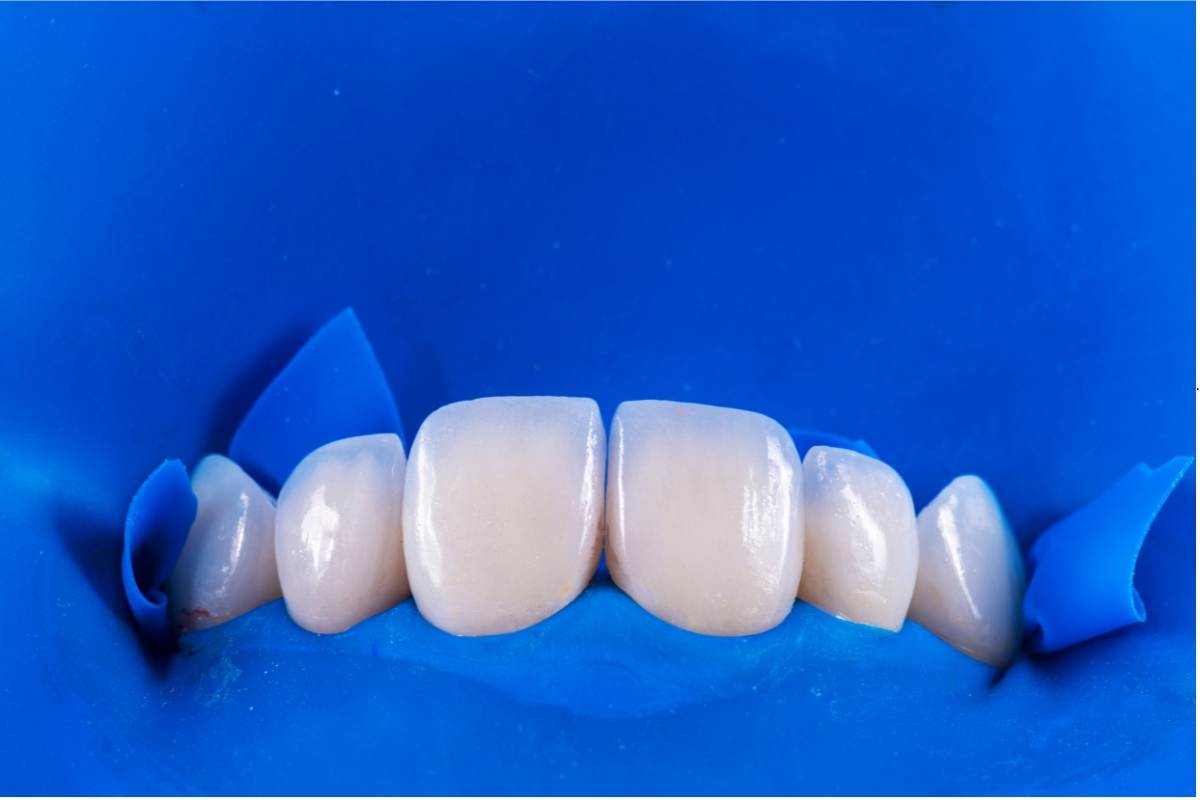
Dental veneers are thin shells, typically between 0.5 and 1 millimeter thick, custom-fabricated from porcelain or composite resin and bonded permanently to the front surfaces of the teeth. They cover the visible portion of the tooth entirely, masking imperfections while preserving most of the underlying natural tooth structure. Because they are custom-made for each patient, they can be designed to achieve a specific color, shape, length, and surface texture.
The Smile Concerns Veneers Address Most Effectively
- Deep or intrinsic staining: Discoloration from tetracycline antibiotics, fluorosis, or naturally gray-toned teeth does not respond to whitening. Veneers cover the discoloration completely with a color that can be matched to the surrounding teeth or selected entirely.
- Chipped or fractured enamel: Chips along the edges of front teeth affect the appearance of the entire smile. Veneers restore the original shape and protect the exposed area from further breakdown.
- Gaps between teeth: Small to moderate spacing between teeth can be closed with veneers by slightly widening the adjacent teeth. For larger gaps, orthodontic treatment may be a better starting point.
- Minor crowding or alignment irregularities: Teeth that are slightly rotated, overlapping, or uneven in length can be visually corrected with veneers, often referred to as “instant orthodontics” for mild cosmetic misalignment.
- Worn or shortened teeth: Years of grinding or acid erosion can shorten teeth and give the smile a flattened, aged appearance. Veneers restore length and proportion while protecting the underlying tooth.
The Veneer Process at Esthetique Dental
- Consultation: Dr. Patel reviews your goals, examines your teeth and gums, and discusses what is realistically achievable. Photographs and digital imaging may be used to give you a preview of possible outcomes.
- Preparation: A thin layer of enamel, roughly the thickness of the veneer itself, is removed from the front surface of each tooth. This step is permanent and irreversible, which is why choosing a skilled provider is critically important.
- Temporaries: While the custom veneers are being fabricated, temporary veneers protect the prepared teeth and give you a preview of the new shape and size.
- Placement: The permanent veneers are tried in for color and fit before being permanently bonded. Fine adjustments are made to ensure a completely natural bite and appearance.
Frequently Asked Questions
Q: How long do porcelain veneers last?
A: With proper care, porcelain veneers typically last ten to twenty years or more. Avoiding hard foods, wearing a night guard if you grind, and maintaining regular dental cleanings significantly extends their lifespan.
Q: Are veneers obvious up close?
A: Not when placed well. Modern porcelain mimics the translucency and surface characteristics of natural enamel very closely. Dr. Patel’s approach prioritizes natural-looking results over dramatic, cookie-cutter uniformity.
Q: Can veneers be whitened if they get stained?
A: Porcelain is stain-resistant but does not respond to whitening treatments. The shade is fixed at placement. It is recommended to whiten natural teeth before veneer placement so the shade can be matched accurately.
Q: Am I a good candidate for veneers?
A: Candidates should have healthy teeth and gums, adequate enamel thickness, and cosmetic concerns that fall within what veneers can address. Active decay or gum disease must be resolved first. Dr. Patel will conduct a thorough evaluation and give you an honest recommendation.
See What Your Smile Is Really Capable Of
If you have been curious about what veneers could do for your smile, a consultation with Dr. Darshan P. Patel at Esthetique Dental is the clearest next step. The team will walk you through what is possible, what to expect, and what the investment looks like for your specific case. Schedule at +1 817-741-1240 today.
**Disclaimer: This content should not be considered medical advice and does not imply a doctor-patient relationship.